
Solid-State Batteries: Are We 5 Years Away or 50?
A data-driven framework to cut through the hype on solid-state batteries and decide if delaying your EV purchase makes financial sense.

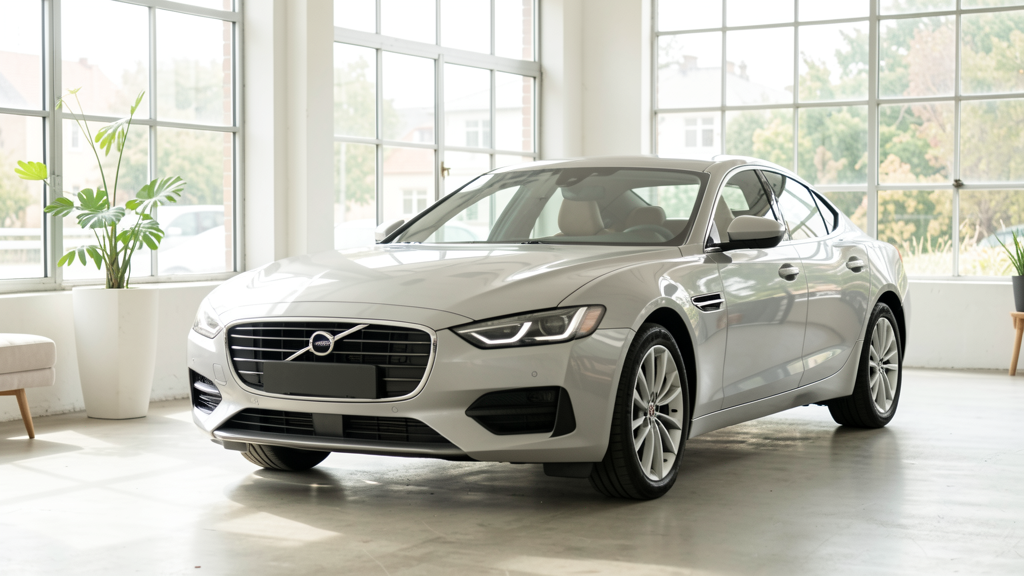
The automotive industry is currently gripped by a tension between incremental improvements and revolutionary promises. In 2026, the average electric vehicle offers a respectable range, yet "range anxiety" persists as a psychological barrier for mass adoption. Enter the solid-state battery—a technology repeatedly touted by startups and legacy OEMs as the silver bullet that will enable 1,000-kilometer ranges, 10-minute charging, and absolute safety.
For a consumer standing on a dealership lot today, the marketing noise creates a paralyzing dilemma: should you commit to a vehicle using current lithium-ion chemistry, or wait two years for the "next big thing"? The answer lies not in press releases, but in the hard data surrounding energy density and cycle life. By treating the purchase decision as an analytical audit, you can separate investor hype from engineering reality.
1. Verify the Gravimetric Energy Density Claims
The first filter for any battery claim is gravimetric energy density, measured in watt-hours per kilogram (Wh/kg). This figure dictates how much energy a battery pack holds relative to its weight, directly correlating to vehicle range. Investor pitch decks often highlight "laboratory achievements" that fail to account for the weight of necessary casing, thermal management systems, and battery management electronics.
To perform a reality check, compare the claimed cell-level density against the pack-level reality. Current industry-standard lithium-ion NMC 811 cells achieve roughly 270 to 300 Wh/kg at the cell level. However, once integrated into a pack with cooling plates and structural reinforcement, the system-level density often drops to 140–160 Wh/kg.
Solid-state proponents routinely cite figures of 400 to 500 Wh/kg at the cell level. Toyota, for instance, has publicized targets around 450 Wh/kg for its硫化物 based solid-state batteries. However, a savvy buyer must look for the "system-level" footnote. As of 2026, most verified prototypes achieving these high densities do so in small, single-layer pouches under strictly controlled temperatures. When scaled to a 60 kWh or 100 kWh automotive pack, the added structural support required to contain the solid electrolyte's mechanical expansion can erode a significant portion of that weight advantage. If a manufacturer announces a vehicle launch in 2027 claiming a 50% range increase without a corresponding weight reduction, they are likely quoting optimistic cell-level data rather than achievable system metrics.
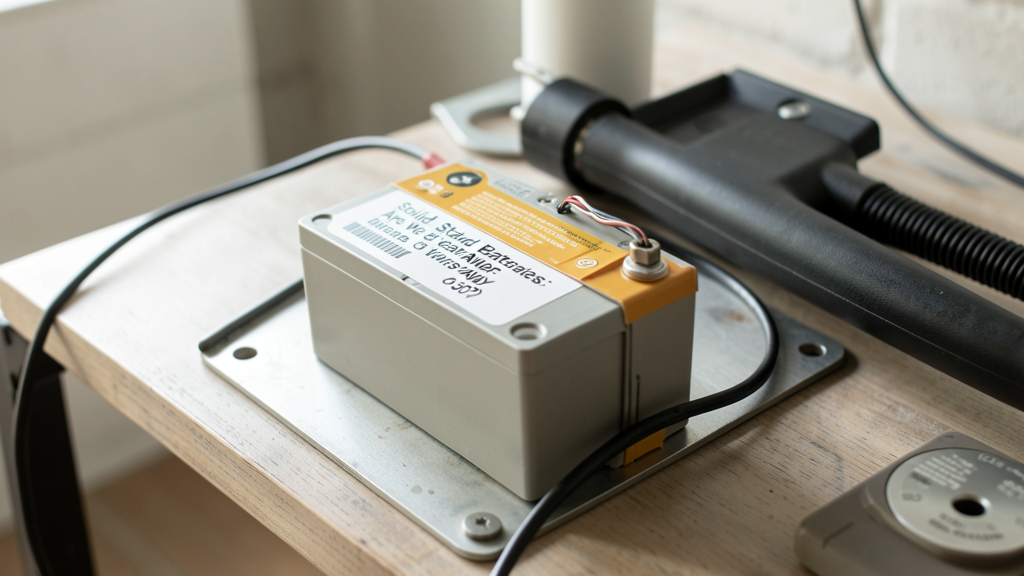
This density verification is crucial because it informs vehicle packaging. Only with a genuine leap in energy density can manufacturers move away from the "skateboard" platform layout that dominates today. A true density breakthrough would enable architectures like the One-Box Design, maximizing interior volume without sacrificing range.
2. Cross-Reference Cycle Life Projections Against Degradation Curves
Energy density is irrelevant if the battery degrades rapidly. The second step in your audit involves analyzing cycle life—the number of complete charge and discharge cycles a battery can undergo before its capacity falls below 80% of its original rating.
For conventional lithium-ion, the industry standard warranty covers 8 to 10 years or roughly 1,500 to 2,000 cycles. Solid-state batteries face a distinct hurdle here: dendrite formation and interfacial stability. While the solid electrolyte is theoretically immune to the leakage and thermal runaway risks of liquid electrolytes, the physical interface between the anode and the solid electrolyte can crack during the expansion and contraction of charging cycles.
You must look for third-party validation rather than manufacturer claims. According to data published in Nature Energy in late 2025, several sulfide-based solid-state cells demonstrated impressive initial capacity but suffered capacity fade of over 20% after just 300 to 400 cycles at room temperature. Some high-performance prototypes mitigate this by operating at elevated temperatures (60°C–80°C), but maintaining a battery at that heat requires constant energy drain, negating range efficiency gains.
When a brand like QuantumScape or Toyota announces a breakthrough, check the fine print for the "C-rate" and temperature conditions of the cycle life test. If a 1,000-cycle claim is based on a 0.1C charge rate (a 10-hour slow charge) rather than the 1C to 4C rates (1-hour to 15-minute fast charges) expected in real-world driving, the data is not yet applicable to consumer vehicles.
3. Audit the Manufacturing Maturity Level
A technology can work in the lab and still be decades away from your driveway due to manufacturing constraints. This step assesses the "Technology Readiness Level" (TRL). Currently, most automotive-grade Li-ion production is at TRL 9, meaning the system is proven in successful operations. Many solid-state variants are still stuck between TRL 4 and TRL 5—validation in a relevant environment.
The primary bottleneck is the production of the solid electrolyte itself. Liquid electrolytes are simply injected into the cell; solids must be manufactured into thin sheets or deposited as a powder and compressed. This requires either a slurry-casting process that risks contamination, or a dry-room process that is astronomically expensive to scale.
Consider the capital expenditure involved. Building a gigafactory for conventional batteries costs roughly $5 to $7 billion per 100 GWh of capacity. Solid-state manufacturing requires different pressing machinery and stricter atmosphere controls (argon-filled dry rooms), potentially doubling the capex per unit of output. In 2026, only pilot lines exist. For example, the joint venture between Nissan and NASA operates a pilot plant in Yokohama, but its output is measured in megawatt-hours, not gigawatt-hours.
If the decision to wait rests on a car priced for the mass market (under $50,000), the manufacturing economics do not yet support that timeline. The high cost of manufacturing will restrict solid-state batteries to luxury and hypercar segments—where low volumes absorb high costs—for the first several years of commercialization.
4. Calculate the Opportunity Cost of Deferral
The final step is financial. Weighing the "Wait vs. Buy" proposition requires calculating the total cost of ownership (TCO) difference between buying a proven vehicle now versus waiting for a hypothetical future model.
Assume you are considering a purchase in mid-2026. If you wait for a solid-state model projected to arrive in 2029 or 2030, you must account for three years of continued operation of your current internal combustion vehicle (ICE) or a cheaper interim EV.
Take a scenario involving the 2024 Mazda CX-90 Inline 6 as a placeholder for a current ICE holder. Driving an ICE vehicle 15,000 miles annually at 25 MPG with fuel at $4.00/gallon costs $2,400 per year in fuel alone, plus roughly $500 in maintenance (oil changes, brake service). Over three years, that is $8,700 in operating costs.
Now, compare that to the potential savings of an EV. Even a "legacy" 2026 EV charging at home at $0.16/kWh costs roughly $600 per year in electricity. If you delay switching to the EV for three years to wait for solid-state tech, you effectively burn over $8,000 in fuel and maintenance.
Furthermore, solid-state batteries are unlikely to be cheap initially. Analysts predict a premium of 20% to 30% over existing Li-ion packs upon launch. If the "solid-state EV" in 2029 costs $60,000, but a comparable Li-ion EV in 2026 costs $45,000, you are paying a $15,000 premium for technology that might offer an extra 100 miles of range—range you likely don't need for 95% of your driving.
By calculating the "break-even point," you will often find that the fuel savings from buying a current EV today offset the range benefits of a future solid-state EV five years down the line. Unless your daily driving exceeds 300 miles and you lack access to home charging, the math rarely supports a multi-year wait based on battery chemistry alone.
The Silicon Anode Bridge Strategy
The dilemma of waiting stems from a false binary choice: keep your gas guzzler or wait for the perfect solid-state battery. The market is currently deploying a "bridge technology" that invalidates the need to wait for pure solid-state solutions: silicon-dominant anodes.
Silicon anodes offer 20% to 40% higher energy density than graphite anodes but are compatible with existing liquid electrolyte manufacturing lines. This means automakers can roll out "improved range" vehicles (e.g., 380 to 450 miles of range) within the next 24 months without the manufacturing risk of solid-state electrolytes.
Groups like Sila Nanotechnologies and Enovix have already entered volume production with batteries for consumer electronics and are ramping for automotive partners. These batteries utilize a small percentage of silicon to boost performance without the severe swelling issues that plagued early attempts.
This suggests the optimal buying strategy is not a hold-out until 2030. If your vehicle needs replacement in 2026 or 2027, targeting a vehicle with a silicon-anode "gen 2" lithium-ion battery provides a substantial upgrade in range and charging speed over 2024 models. It allows you to capture the majority of the efficiency gains now, while letting the early adopters finance the debugging of solid-state manufacturing lines.
Ultimately, the solid-state revolution will arrive, but it will likely look like a gradual evolution in the 2030s rather than an overnight switch in 2027. By applying a rigorous audit to the density, cycle life, and manufacturing claims, the rational consumer avoids the opportunity cost of waiting for a technology that is still climbing the learning curve.
Sources
To dig deeper and verify the data, see:
Read next

Why the One-Box Design Defines the Future of Urban EVs
Eliminating the hood isn't just a stylistic choice; it is a geometric necessity driven by skateboard platforms to maximize interior volume in congested cities.

The Four-Cylinder Shift: Why Hypercars Are Downsizing for Speed
Cylinder counts are dropping, but lap times are not; here is why top-tier engineering favors the turbocharged inline-4 over the V8 for hybrid hypercars.