
Does the 2024 Mazda CX-90 Inline-6 Redefine the Family SUV Segment?
Mazda's large Inline-6 engine choice for the CX-90 challenges industry downsizing trends by prioritizing torque bandwidth and vehicle balance over peak efficiency metrics.

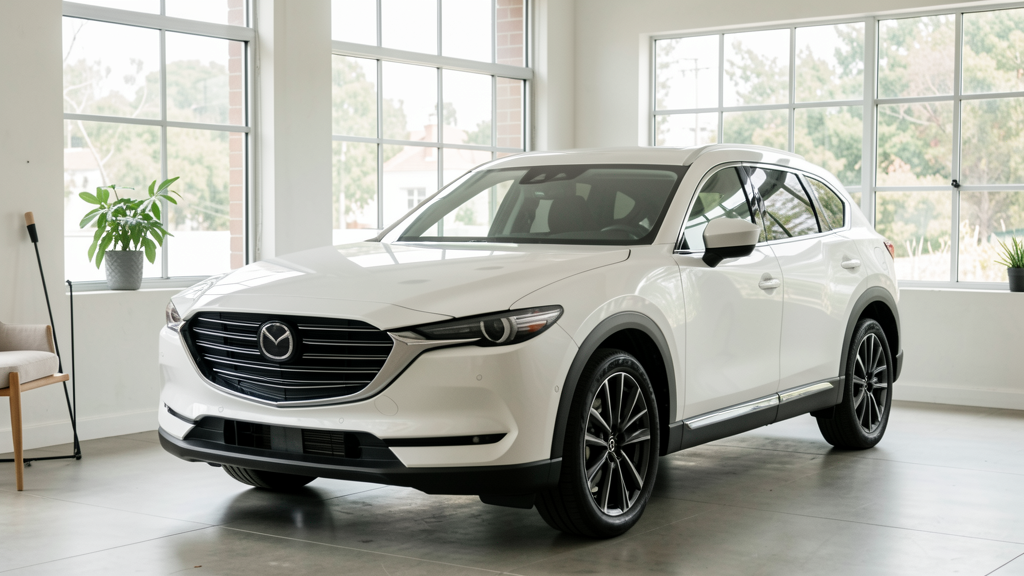
The current three-row SUV market has largely settled on a specific formula for propulsion: transversely mounted, turbocharged four-cylinder engines paired with electric motors. This configuration, found in vehicles like the Toyota Highlander Hybrid or the Honda Pilot, prioritizes packaging efficiency and fuel economy metrics. Mazda, however, arrived at a different junction with the CX-90. Instead of following the downsizing trend that has dominated the last decade, the manufacturer introduced a vehicle built around a large-displacement internal combustion engine. This decision raises a pertinent question for buyers in 2026: does sticking with a large Inline-6 actually offer a tangible benefit, or is it a nostalgic engineering exercise in an electrified world?
The Engineering Case Against Downsizing
The heart of the CX-90 controversy and appeal is the e-Skyactiv G 3.3-liter turbocharged Inline-6. In an era where 2.0-liter engines are tasked with moving vehicles weighing over 4,500 pounds, Mazda increased displacement to maintain a naturally linear torque curve. The 3.3-liter unit produces 280 horsepower and 332 lb-ft of torque in standard form, rising to 340 hp and 369 lb-ft in the Turbo Premium Plus trim.
The advantage of increased displacement lies in throttle response and cylinder filling. A smaller engine relies heavily on boost pressure to generate adequate torque, often resulting in "turbo lag"—a delay between pedal input and power delivery. By utilizing a larger cylinder bore and stroke, the CX-90's engine generates significant torque at lower RPMs without needing aggressive turbo spooling. This results in a driving feel that mimics a naturally aspirated V8, providing smooth acceleration for highway merging that feels less strained than the high-revving buzz of a turbocharged four-cylinder.

Why the Longitudinal Layout Changes Everything
Perhaps more significant than the cylinder count is the placement of the engine. Most competitors in the mainstream mid-size SUV segment utilize a transverse engine layout, where the engine is mounted sideways. This maximizes interior space but compromises front-rear weight distribution and often results in torque steer under hard acceleration. Mazda opted for a longitudinal layout, positioning the Inline-6 front-to-back.
This architectural choice serves a dual purpose. First, it facilitates a rear-biased All-Wheel Drive system. By sending the primary driving force to the rear wheels and diverting power to the front only when slip is detected, the vehicle gains a more neutral handling balance. The CX-90 can rotate through corners with a precision rarely found in three-row family haulers, which typically feel top-heavy and understeer-prone. Second, it allows for a double-wishbone front suspension setup. While competitors often settle for MacPherson struts to save space, the double-wishbone design offers better camber control during cornering, keeping the tire contact patch flatter on the road surface. While we often critique design trends that prioritize style over substance, the CX-90’s packaging is a rare example of engineering dictating form.
The Market Context of Mild Hybrids
Mazda classifies the CX-90 as a "Mild Hybrid," utilizing a 48-volt integrated starter-generator (M-Hybrid Boost). This system is not designed to provide significant electric-only range, unlike the plug-in hybrids currently flooding the European and North American markets. Instead, the electric motor exists to fill torque gaps during acceleration and recover energy during deceleration.
This approach highlights a specific market prediction: that pure internal combustion engines will soon be phased out by regulation, making massive investments in new PHEV architectures a risk for certain platforms. By refining the existing ICE architecture with a small electric assist, Mazda extends the viability of the piston engine without the massive weight and cost of a large battery pack. It is a stop-gap solution that acknowledges the coming transition. As we wait for the next leap in energy density, such as solid-state batteries, manufacturers are forced to choose between heavy electrification or mechanical refinement. Mazda chose the latter.
The Verdict on Driving Engagement
For the reader seeking a three-row SUV that does not drive like a penalty box, the CX-90’s engineering choices pay dividends. The vehicle feels planted and composed, with a ride quality that manages to absorb bumps without feeling floaty. The steering is heavier and more communicative than the light, electrically assisted efforts found in many rivals. However, these choices come with specific trade-offs that potential buyers must accept.
The fuel economy, while improved by the mild-hybrid system, trails behind segment leaders dedicated to hybridization. Furthermore, the longitudinal engine layout eats into interior space, specifically the third-row legroom and cargo capacity compared to transverse-mounted rivals like the Kia Telluride. Recent discussions regarding the design oversights in other high-profile refreshes show how manufacturers struggle to balance engineering priorities with user needs, and the CX-90 is not immune to this.
Conclusion
The 2024 Mazda CX-90 Inline-6 does not redefine the family SUV segment by outselling its competitors or offering superior utility. Instead, it redefines the segment by proving that a family vehicle does not have to abandon mechanical sophistication. While the industry moves toward homogeneous platforms designed to accommodate batteries first and driving dynamics second, the CX-90 stands as a testament to the longitudinal, rear-drive philosophy. It offers a compelling argument for the driving enthusiast who needs seven seats but refuses to accept that driving engagement must be sacrificed for utility. It is a niche play, but one that preserves a type of driving experience that is rapidly becoming extinct in the category.
Sources
To dig deeper and verify the data, see:
Read next
Myth vs. Reality: Is the 'SUV Coupe' Silhouette Actually Functional?
A breakdown of the aerodynamic gains versus the substantial cargo and headroom penalties in the SUV coupe segment.
Solid-State Batteries: Are We 5 Years Away or 50?
A data-driven framework to cut through the hype on solid-state batteries and decide if delaying your EV purchase makes financial sense.