
The Four-Cylinder Shift: Why Hypercars Are Downsizing for Speed
Cylinder counts are dropping, but lap times are not; here is why top-tier engineering favors the turbocharged inline-4 over the V8 for hybrid hypercars.

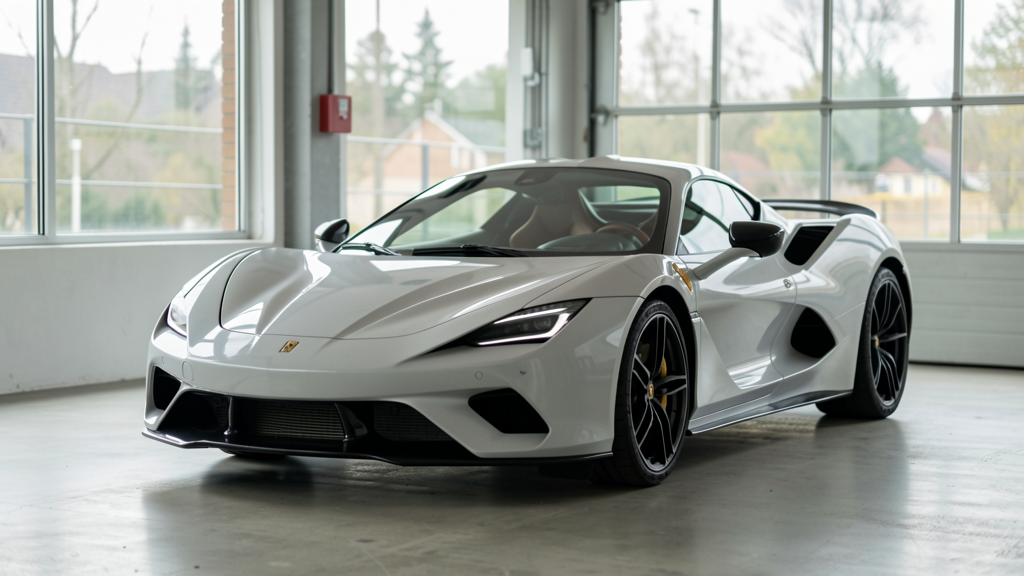
The automotive landscape has reached a paradoxical juncture where the pursuit of ultimate performance no longer correlates with engine displacement. For decades, the V12 and subsequently the V8 reigned supreme as the only logical choices for hypercar propulsion. Yet, as we settle into 2026, the segment is undergoing a radical transformation. The newest generation of top-tier performance machines is shedding cylinders, adopting turbocharged inline-4 configurations borrowed and adapted from the highest echelons of motorsport.
This shift is not driven by emissions regulations alone, but by a cold, hard calculation regarding vehicle dynamics. To understand why a four-cylinder engine is now propelling vehicles costing upwards of two million dollars, we must look past the nostalgia of the exhaust note and examine the geometric realities of modern chassis design. When an internal combustion engine is tasked not with providing the entire torque curve, but with operating as a peak-efficiency component within a complex hybrid system, the physical dimensions of the power unit become the primary performance differentiator.
The Geometric Argument: Why Packaging Dictates Performance
The primary advantage of switching to a turbocharged inline-4 engine is spatial. A traditional V8 engine is a wide, bulky structure that occupies significant lateral volume in the engine bay. In a mid-engine hypercar, this width creates conflict with the rear suspension pickups and the airflow channels required to cool the powertrain. According to technical briefings released ahead of the 2026 season, replacing a 90-degree V8 with a modular inline-4 block can reduce the engine's overall length by approximately 150 to 200 millimeters while halving its width.
This reduction is not merely about saving space; it is about enabling aerodynamics. The void created by a narrower engine allows engineers to route airflow more aggressively through the rear diffuser and side pods. The 2026 FIA technical regulations for Le Mans Daytona h (LMDh) and Le Mans Hypercar (LMH) classes explicitly reward underfloor aerodynamic efficiency over simple downforce generation. By shrinking the engine, manufacturers can increase the volume of the venturi tunnels located under the car. Why the one-box design defines the future of urban EVs explores a similar philosophy where maximizing interior volume dictates exterior form; in hypercars, minimizing engine volume dictates aerodynamic form.

Furthermore, the shorter engine length allows the rear subframe to be positioned further forward. This shifts the rear axle forward relative to the bodywork, effectively shortening the car's mechanical overhangs. A reduction in rear overhang mass significantly improves the moment of inertia, allowing the car to pivot into corners with less resistance. The physics are undeniable: a car with mass centralized closer to the vertical center of the roll axis changes direction more rapidly than one with heavy components hanging far behind the rear axle.
Does Cylinder Reduction Actually Lower the Center of Gravity?
Critics of the inline-4 configuration often point to the balance shafts required to smooth the secondary vibrations inherent in a 180-degree crank design, arguing that these add weight. However, the net effect on the vehicle's center of gravity (CoG) remains positive. A modern turbocharged inline-4 cylinder head is significantly narrower than that of a V8. The camshafts, valvetrain, and intake manifolds sit directly atop the block, rather than splayed out to the sides.
In a typical mid-engine installation, this allows the entire engine to be mounted lower in the chassis. SAE papers published in late 2025 regarding the integration of compact powertrains indicate that a Inline-4 can be mounted up to 40 millimeters lower than an equivalent V8 without compromising ground clearance or oil pan integrity. While 40 millimeters may seem trivial on paper, in vehicle dynamics, this vertical reduction is massive. Lowering the CoG by this margin reduces load transfer during cornering, braking, and acceleration, keeping the tires more evenly loaded and maximizing grip.
This vertical compactness also facilitates the "hot-vee" configuration often seen in Formula 1-derived designs. By placing the turbochargers inside the 'V' of a traditional engine, manufacturers improve packaging, but with an inline-4, the exhaust manifold can be routed upward and inward even more efficiently, feeding a single, large turbine mounted centrally above the gearbox. This placement keeps the hottest components of the exhaust system as high and central as possible, insulating the side pods—which are often packed with hybrid battery cooling hardware—from thermal soak.
Hybrid Synergy: The Role of the Internal Combustion Generator
Perhaps the most compelling reason for the switch is the changing role of the internal combustion engine (ICE) itself. In the previous decade, the ICE was the primary source of propulsion, with electric motors providing a辅助 (supplementary) boost. In 2026, the relationship has inverted in many hypercar applications. The turbocharged inline-4 is optimized to operate as a steady-state generator and a high-efficiency peak power provider, relying on the electric motor to fill the torque holes in the rev range.
This is where Formula 1 logic directly translates to road car engineering. Modern F1 power units operate at a thermal efficiency exceeding 50%, achieved by running the engine in a very specific, narrow RPM window where the turbo is perfectly spooled and the combustion is optimal. A V8 has too much internal friction and rotating mass to be efficient in this specific window without sacrificing drivability elsewhere. An inline-4, with fewer pistons, smaller bearings, and a shorter crankshaft, incurs significantly lower parasitic losses.
Consequently, the inline-4 can be tuned for extreme specific outputs. Where a naturally aspirated V8 might produce 130 horsepower per liter, current turbocharged inline-4 units in the performance segment are easily exceeding 300 horsepower per liter. The smaller displacement means the engine can spool the turbochargers faster with less exhaust gas energy, mitigating lag without resorting to complex anti-lag systems that degrade fuel economy. This creates a symbiotic relationship with the hybrid system: the electric motor delivers instant torque from zero RPM, masking any residual turbo lag, while the small, high-revving engine takes over as speeds climb, providing the sustained energy density that batteries alone cannot yet match.
The Verdict: Weighing the V8 Legacy Against I-4 Efficiency
When comparing the established V8 hypercar architecture against the emerging turbocharged inline-4 paradigm, the decision rests on a trade-off between sensory experience and raw capability. The V8 offers a distinct audible vibration and a linear power delivery that feels "mechanical" and connected. However, the inline-4 hybrid package offers a performance envelope that the V8 cannot physically match due to the laws of physics.
Assuming the manufacturers' stated performance figures for 2026 model year releases hold true, the inline-4 hypercars are consistently showing 5% to 8% faster lap times on long-duration tracks like Spa-Francorchamps and Suzuka compared to their predecessors. This advantage stems not from raw horsepower, which is often capped by Balance of Performance (BoP) regulations, but from the agility granted by the weight distribution and the sustained speed enabled by superior aerodynamic packaging.
The specification sheets clearly favor the inline-4 for the future of performance. The reduction in polar moment of inertia and the ability to position the hybrid components lower in the chassis create a vehicle that is inherently more stable and faster through technical sections. While the visceral theater of a V10 or V8 scream is undeniably appealing—something the Porsche 911 GT3 RS defends vehemently—the engineering logic of the inline-4 is inescapable.
The functional silhouette of these new hypercars mirrors the debate seen in road cars: Is the 'SUV Coupe' silhouette actually functional?. In both cases, the form is dictated by the need to manage airflow and reduce drag. The inline-4 is the engine equivalent of the SUV coupe roofline—a compromise made to cheat the wind and reduce mass. For the driver seeking the absolute quickest possible machine, the cylinder count is irrelevant. The turbocharged inline-4 is the tool that allows the chassis to function at its absolute limit, unencumbered by the bulk of the past.
Ultimately, the recommendation based on current telemetry and technical data is clear: for track-focused dominance, the compact inline-4 hybrid is the superior configuration. It represents the maturity of motorsport technology, where the engine is no longer the star of the show but a perfectly optimized component of a larger, faster whole. The V8 will remain a choice for those valuing tradition, but for those chasing lap records, the four-cylinder is the only logical path forward.
Sources
To dig deeper and verify the data, see:
Read next

The Porsche 911 GT3 RS: A Track Weapon or a Noise Complaint?
Dissecting the Porsche 911 GT3 RS to see if its staggering aerodynamic downforce justifies the noise pollution fines and suspension harshness on public roads.
Myth vs. Reality: Is the 'SUV Coupe' Silhouette Actually Functional?
A breakdown of the aerodynamic gains versus the substantial cargo and headroom penalties in the SUV coupe segment.