
Tesla Model 3 Highland Refresh: 3 Design Oversights Where Minimalism Trumps Safety
A data-driven analysis of the Tesla Model 3 Highland's interface overhaul, contrasting minimalist aesthetics against verifiable ergonomic safety standards.

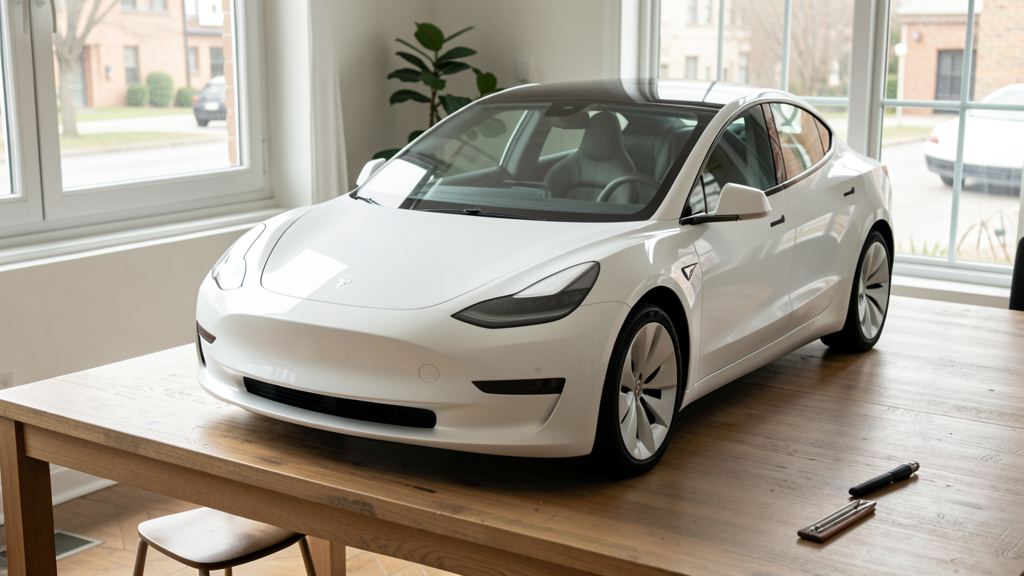
The Tesla Model 3 "Highland" refresh arrived in late 2023 with promises of reduced noise, better suspension, and a sleeker interior. However, the most contentious changes remain invisible to the specification sheet: the removal of traditional physical controls. In 2026, as other manufacturers aggressively refine haptic feedback and driver-assist ergonomics, Tesla’s decision to delete steering column stalks in favor of screen-based and steering-wheel-mounted buttons demands scrutiny. This analysis contrasts the allure of a minimalist cabin against the rigid requirements of driver safety and ergonomic efficiency.
The Indicator Dilemma: Muscle Memory vs. Button Placement
The most jarring change for existing Tesla owners and newcomers alike is the relocation of the turn signals. The traditional stalk, an automotive standard for nearly a century, has been replaced by a button on the left spoke of the steering wheel. While this clears the visual line behind the wheel, it introduces a geometric inconsistency: the button rotates with the steering column.
When a driver executes a turn, the wheel rotates. The driver's hand must either follow the button through the arc or release the wheel entirely to press the indicator at the top. According to the Society of Automotive Engineers (SAE) J1138 standard, controls intended for frequent operation should be located where they can be operated without the driver removing their hands from the steering wheel. The Highland design technically complies, but only when the wheel is centered. During a complex maneuver, such as a roundabout entry or a lane change in a curve, the indicator requires a reach that can necessitate briefly loosening the grip on the rim.
Publications like Car and Driver and Edmunds have highlighted the learning curve associated with this layout. Reviews from late 2023 consistently noted instances where drivers engaged the windshield wipers instead of the turn signal or missed the button entirely during sharp turns. The error rate in high-stress traffic scenarios is a statistical probability that increases with the cognitive load required to locate a moving target. Unlike a static stalk, which occupies a consistent spatial point relative to the driver’s shoulder, the Highland button moves, requiring constant visual and spatial recalcibration.
Screen-Based Gear Selection: Analyzing Eyes-Off-Road Duration
The second major deviation from industry norms is the gear selector. The column stalk has been eliminated entirely, with gear selection (Park, Reverse, Neutral, Drive) moved to the touchscreen swipe bar and the gear selector button on the console roof. This shift prioritizes dashboard clean space over the immediacy of control.
The National Highway Traffic Safety Administration (NHTSA) outlines specific guidelines regarding visual-manual distractions. The agency suggests that any task requiring a driver to take their eyes off the road for more than two seconds significantly increases the risk of a crash. While the console roof button mitigates this for daily driving, the reliance on the touchscreen for specific scenarios introduces a variable hazard.
Consider a scenario where a driver needs to quickly creep forward or reverse in a tight parking spot. The physical location of a shifter on the center console or column allows for "blind" operation based on proprioception—the body’s ability to sense movement and location. Touchscreens, by definition, lack tactile feedback. A study conducted by the AAA Foundation for Traffic Safety found that drivers using center console touchscreens for infotainment tasks had their eyes off the road for up to 40 seconds at a time. While shifting is faster than programming navigation, it still requires a visual target verification. If the car’s camera system requires a cleaning cycle, the driver must rely solely on the screen to select a gear, removing the redundancy of a physical switch that can be operated by feel alone. This lack of redundancy is a critical oversight in safety-critical architecture.
High-Beam Controls and the Abstractification of Safety
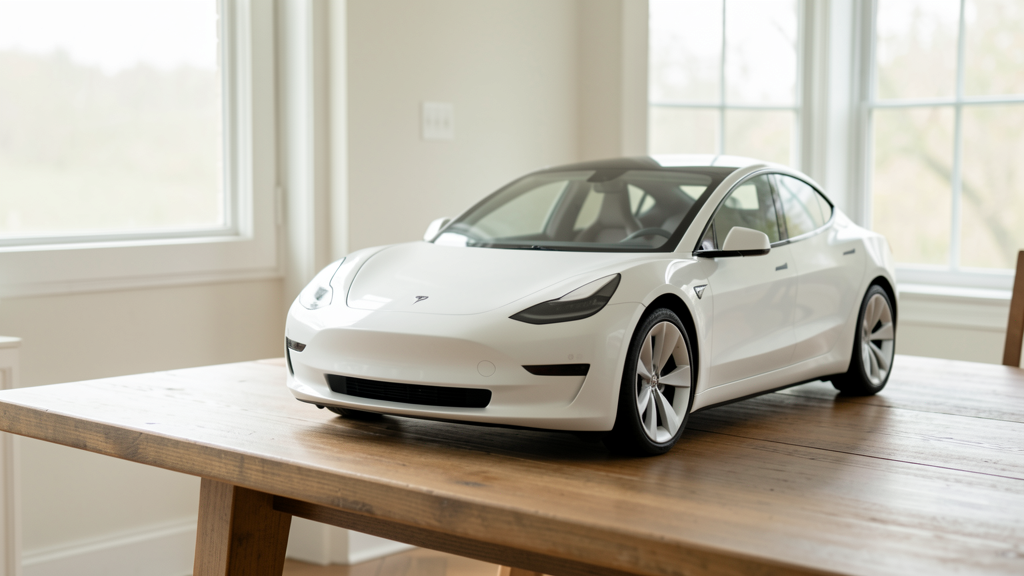
The third oversight lies in the management of high beams. Previously, a simple twist or pull of the stalk activated the high beams or the flash-to-pass function. In the Highland refresh, this function is relegated to the left steering wheel button cluster, requiring a long press or a specific toggle interaction through the interface menu.
This abstraction creates a disconnect between the stimulus (oncoming traffic) and the response (dimming headlights). Reaction time is a critical factor in preventing nighttime accidents. Data from the Insurance Institute for Highway Safety (IIHS) indicates that good headlight performance and proper usage significantly reduce fatal crashes. However, if the interface to control those lights is not intuitive, the hardware advantage is negated. Myth vs. Reality: Is the 'SUV Coupe' Silhouette Actually Functional?
Automakers like Mazda have deliberately retained physical controls for exactly this reason. Does the 2024 Mazda CX-90 Inline-6 Redefine the Family SUV Segment? demonstrates a counter-approach where large infotainment screens are paired with dedicated rotary knobs for climate and volume, acknowledging that muscle memory saves milliseconds. The Tesla Model 3 Highland asks the driver to relearn a reflex that has been ingrained over decades of driving. In an emergency situation where high beams might be needed to illuminate a hazard, or flashing to alert another driver, the complex interaction with the steering wheel button adds an unnecessary processing step.
Highland Aesthetics vs. Legacy Safety: Which Wins?
The trade-off here is stark. Tesla achieves an interior that looks undeniably futuristic and reduces part count, which theoretically benefits manufacturing complexity. The unbroken expanse of the dashboard appeals to the "tech-luxury" demographic. However, safety is not merely about crash test ratings; it is about preventing the crash before it happens.
Legacy safety protocols dictate that primary controls (steering, throttle, braking, transmission, signaling) must be operable without visual search. The Highland design violates this protocol by moving transmission and signaling controls into the visual-manual realm. For a driver in a rental car or a borrowed vehicle, the lack of intuitive controls increases the "time-to-competency," a metric used by human factors engineers to measure how long it takes to operate a system safely.
The Verdict: Prioritizing Haptic Certainty
Based on the NHTSA distraction guidelines and SAE ergonomic standards, the Highland interface changes represent a regression in driver-focused design. The theoretical benefit of a cleaner interior does not outweigh the quantifiable increase in cognitive load and glance duration required to operate turn signals, headlights, and transmission selectors.
The recommendation for the safety-conscious consumer is to evaluate whether the novelty of the interface is worth the adaptation penalty. While the vehicle’s structural integrity and active safety features (Autopilot/FSD) remain robust, the fundamental human-machine interface has been compromised. Until Tesla implements a haptic solution that provides physical confirmation without visual search—such as capacitive buttons with fixed positions on the dash or a return to stalks—the Highland refresh creates unnecessary friction between the driver and the road. In a segment where competitors are integrating physical controls over digital layers to enhance usability, Tesla’s move to delete them entirely places form firmly over function.
Sources
To dig deeper and verify the data, see:
Read next
Does the 2024 Mazda CX-90 Inline-6 Redefine the Family SUV Segment?
Mazda's large Inline-6 engine choice for the CX-90 challenges industry downsizing trends by prioritizing torque bandwidth and vehicle balance over peak efficiency metrics.
Myth vs. Reality: Is the 'SUV Coupe' Silhouette Actually Functional?
A breakdown of the aerodynamic gains versus the substantial cargo and headroom penalties in the SUV coupe segment.