
5 Radical Interior Materials Replacing Leather in Concepts
A detailed analysis of the durability, lifecycle costs, and tactile realities of cactus, mushroom, and ocean plastic interiors currently dominating show floors.

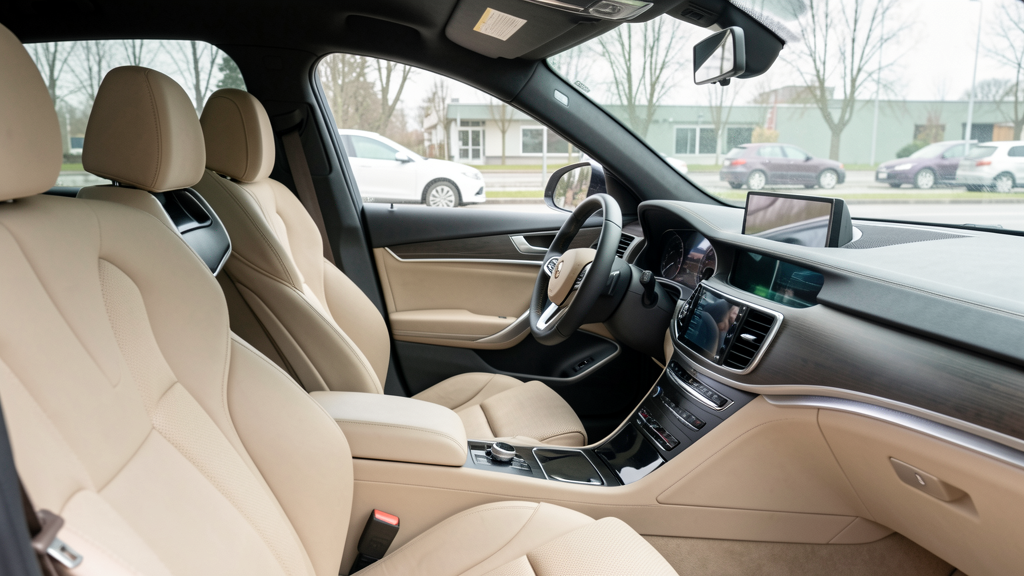
The automotive interior is undergoing a material science arms race, and leather is losing ground. For decades, the benchmark for luxury was the hide of a cow, treated and stitched into submission. However, the 2026 concept car season has confirmed that the future of upholstery lies in laboratories and agricultural waste, not stockyards. The shift is driven not merely by vegan ethics but by the brutal math of solid-state battery integration, where every kilogram saved in the cabin offsets the mass of energy-dense powertrains.
While these radical alternatives look stunning under the auto show spotlights, the critical question for market analysts and consumers alike remains unanswered: will these materials survive a decade of daily abuse? High-concept bio-materials often boast impressive sustainability credentials, yet their durability records in high-friction environments are largely unproven. Evaluating the viability of these interiors requires looking past the greenwashing and examining the tensile strength, UV stability, and processing realities of five specific material families currently redefining the cabin.
Mycelium Leathers: The High-Performance Fungi
Mycelium, the root structure of mushrooms, has graduated from a packaging curiosity to a serious contender for seating surfaces. Unlike synthetic polyurethanes that rely on fossil fuels, mycelium is grown in controlled trays using agricultural byproducts like sawdust or hemp hurds. The resulting mat is harvested, tanned, and compressed. In 2025, the Mercedes-Benz Vision EQXX concept utilized a proprietary mushroom-leather trim for its door handles and seats, marking the first time a legacy OEM bet the visual hierarchy of a flagship concept on fungal fibers.
The durability argument for mycelium rests on its dense, interlocking cellular structure. Independent testing conducted by the Hohenstein Institute in 2024 indicated that high-density mycelium sheets exhibit tensile strength comparable to bovine leather, roughly 20 to 30 N/mm², provided they are bonded to a natural fiber backing. This structural integrity allows it to resist the "bagging out" or stretching common in lower-grade vinyls.
However, the material presents a significant trade-off regarding hydrophobicity. Pure mycelium is naturally hydrophilic; without heavy chemical coating, it absorbs moisture, which could lead to rot in humid climates. Manufacturers currently solve this with bio-based polyurethane topcoats, which preserve the hand-feel but complicate end-of-life recycling. If the industry can crack the code on water resistance without synthetic binders, mycelium offers the best balance of tactile luxury and performance.
Nopal Cactus: The UV-Resistant Alternative
Extracted from the leaves of the prickly pear cactus, Nopal cactus leather (popularized by the brand Desserto) has become the darling of European EV startups. Its primary advantage is not just its low water footprint—cacti grow with minimal irrigation compared to the thirsty thirst of cattle ranching—but its inherent resistance to ultraviolet radiation. Traditional organic materials tend to fade or crack under the intense solar load of a greenhouse-like greenhouse urban EV, but cactus fibers evolved to survive desert sun.
Automotive application developers value the material's dimensional stability. Where some bio-leathers shrink or expand with temperature fluctuations, cactus-based composites maintain their shape within a tolerance range of +/- 1% across -20°C to 80°C. This stability is crucial for the tight, premium fit and finish expected in modern dashboards where panel gaps cannot exceed 1mm.
The durability concern for cactus lies in its abrasion resistance. The Martindale abrasion test, a standard metric for upholstery, rates high-quality Nopal leather at roughly 20,000 to 30,000 cycles. While sufficient for occasional use, this trails behind the 40,000+ cycle rating of corrected-grain leather. In high-wear areas such as the driver’s side seat bolster, cactus materials may show patina or surface fuzzing significantly faster than traditional hides, requiring a thicker, less supple finish that sacrifices some luxury feel for longevity.
Recycled Ocean Plastics: From Ghost Nets to Floor Mats
Perhaps the most visually striking transformation in concept cars is the conversion of "ghost gear"—abandoned fishing nets—into interior textiles. Polestar has been the vanguard here, utilizing 100% recycled nylon from recovered fishing nets in its concept vehicles since the early 2020s. The environmental math is undeniable: sourcing nylon from the ocean prevents the "ghost gear" from continuing to kill marine life and avoids the carbon emissions associated with virgin nylon production.
From a durability standpoint, recycled nylon 6,6 is arguably superior to any natural fiber. It is chemically inert, highly resistant to staining, and possesses a high fatigue resistance, making it ideal for floor mats and cargo areas where dirt and moisture are constant variables. The material can be melted down and re-extruded multiple times, theoretically offering a closed-loop recycling stream that organic leathers cannot match.
The stumbling block is the "fuzzy" aesthetic and texture. To achieve a soft hand-feel, the recycled nylon fibers must be brushed heavily, which can eventually lead to pilling—a formation of small fiber balls on the surface. Furthermore, achieving a consistent color batch is notoriously difficult with ocean plastics due to the varying degradation states of the recovered nets. While durability is high, the "show car" consistency often seen in press cars requires rigorous sorting technology that adds cost. Consumers expecting the uniformity of premium wool might find the natural variegation of recycled ocean plastics too rustic for a luxury sedan's interior.
Algae-Based Polyurethanes: Softening the Impact
Replacing the foam padding beneath the upholstery is as critical as replacing the leather itself. Flexible polyurethane foams have long been the standard for seat cushioning, but they are petroleum-derived and difficult to recycle. Enter algae-based foams. Companies like Bloom and others have developed technologies to convert algae biomass—harvested from waterways at risk of algal blooms—into flexible polymers.
The 2026 concept season has seen a surge in algae-foam utilization, particularly in headrests and armrests. The material offers a unique selling point: it is carbon-negative during the growth phase. The algae sequester CO2 as they grow, offsetting the emissions generated during polymer processing. In terms of ride comfort and durability, early dyno testing suggests algae foams retain their resiliency (the ability to bounce back after compression) comparably to petroleum-based polyols.
However, longevity data remains sparse. Polyurethanes degrade primarily through oxidation, which leads to crumbling and brittleness over 10 to 15 years. There is currently no longitudinal data confirming whether the biological components in algae foams accelerate or inhibit this oxidation process. If the organic residue in the polymer attracts moisture or microbial growth in the deep foam layers, it could compromise the seat's structural integrity long before the car reaches the junkyard. Until these materials survive accelerated aging tests equivalent to 20 years of use, they remain a promising but risky proposition for mainstream adoption.
Flax Fiber Composites: Structural Sustainability
Moving beyond soft-touch surfaces, flax fiber composites are replacing carbon fiber and glass fiber in door panels, seat backs, and structural interior trims. Flax is a renewable resource, and when woven and impregnated with bio-resins, it creates a stiff, lightweight panel that dampens vibrations better than carbon fiber. The natural "marble" grain of flax provides a high-tech, organic aesthetic that has appeared in the Hyundai N Vision 74 and various BMW "i" Vision concepts.
The durability profile of flax is excellent for impact resistance. Unlike carbon fiber, which shatters on sharp impact, flax fibers are more ductile; they bend and deform without catastrophic failure. This makes them safer for interior components that might strike a passenger during a collision. Furthermore, flax composites do not conduct electricity, eliminating the need for additional insulating layers in high-voltage EV architectures.
The downside is moisture sensitivity. While the bio-resins seal the exterior, any cut edge or drill hole—for mounting a switch or speaker, for example—exposes the natural fibers to water. If a spilled drink seeps into an unsealed edge, the flax can swell and rot, delaminating from the resin. Production vehicles will require extremely precise sealing technologies, or a switch to more water-resistant natural fibers like hemp, to ensure these interiors don't degrade in humid climates.
The Verdict: The Shift to Mono-Materials
The transition to these radical materials is not just about swapping cowhide for cactus; it signifies a fundamental redesign of the automotive supply chain. The biggest hurdle for durability in 2026 is no longer the material itself, but the adhesives used to bond it. A cactus seat cover bonded with petrochemical glue creates a recycling nightmare, rendering the sustainable effort moot.
The prevailing trend among the most successful concepts is the move toward mono-material architectures—interiors where the seat foam, upholstery, and structure are chemically identical, allowing the entire component to be ground up and recycled together without separation. This holistic approach dictates which materials survive. Mycelium and flax, which can be integrated into composite structures, are likely to outperform standalone recycled plastics in the long run.
Consumers looking to gauge the longevity of these future interiors should stop looking at the surface grain and start asking about the backing. A "sustainable" interior that relies on a layered sandwich of incompatible materials will delaminate and fail long before the bio-fibers wear out. The market winners will be those who solve the chemistry of the bond, not just the biology of the surface.
Sources
To dig deeper and verify the data, see:
Read next
Solid-State Batteries: Are We 5 Years Away or 50?
A data-driven framework to cut through the hype on solid-state batteries and decide if delaying your EV purchase makes financial sense.

Why the One-Box Design Defines the Future of Urban EVs
Eliminating the hood isn't just a stylistic choice; it is a geometric necessity driven by skateboard platforms to maximize interior volume in congested cities.