
Myth vs. Reality: Will OTA Updates Void Your Powertrain Warranty?
Manufacturer-sent software patches are legally treated as maintenance repairs, whereas unauthorized ECU flashes remain the fastest way to void your drivetrain coverage.


The anxiety is palpable in almost every EV forum thread. A notification pops up on the touchscreen: "System Update Available." For a generation of drivers used to smartphone updates that occasionally brick devices or change beloved interfaces, the instinct is to hesitate. When the vehicle in question costs as much as a small house and relies on a battery pack guaranteed for eight years, that hesitation turns into dread. The fear is not just a glitchy infotainment system; it is the terrifying possibility that accepting a remote software patch will somehow invalidate the warranty covering the most expensive component of the car—the powertrain.
This fear is largely misplaced, born from a misunderstanding of what Over-the-Air (OTA) updates actually are and how consumer protection laws apply to software-defined vehicles. The critical distinction lies not in the method of delivery (wireless vs. physical connection), but in the origin of the code and the intent of the alteration.
Myth: All Remote Software Changes Are Considered Modifications
The confusion stems from the conflation of "updates" and "mods." In the internal combustion era, modifying a car’s performance almost always required physical intervention—changing the exhaust, adjusting the turbo, or chipping the ECU. Today, performance can seemingly be altered with a tap on a screen. Owners often worry that by accepting an OTA update, they are effectively changing the vehicle from its original, factory-certified state, giving the manufacturer an out to deny a future claim.
Legally, this is incorrect. Manufacturer-sanctioned OTA updates are classified by the automaker and recognized by consumer protection agencies as service campaigns, maintenance items, or safety recalls, not aftermarket modifications. When a brand pushes a patch to refine battery thermal management or adjust regenerative braking curves, they are doing so to bring the vehicle into compliance with its own original specifications.
Federal statutes, such as the Magnuson-Moss Warranty Act in the United States (which influences global consumer standards), explicitly prevent manufacturers from voiding a warranty simply because work was done on the vehicle. In fact, the act stipulates that a warranty can only be denied if the aftermarket part or modification directly caused the failure. Since an OTA update is distributed by the manufacturer itself, it cannot be used as grounds to void the warranty for the systems it is designed to control. To do so would be a violation of the warranty agreement the buyer holds.
Reality: Third-Party 'Tuning' Flashes Are the Real Warranty Killers
Where the waters get murky—and where the legitimate fear should be directed—is toward third-party software interventions. This is the unique angle often overlooked: the difference between an authorized update and an unauthorized "tune." The automotive aftermarket is teeming with devices that promise to unlock hidden horsepower or remove the electronic speed limiter. These devices plug into the OBD-II port and overwrite the calibration maps stored in the Engine Control Unit (ECU) or Battery Management System (BMS).
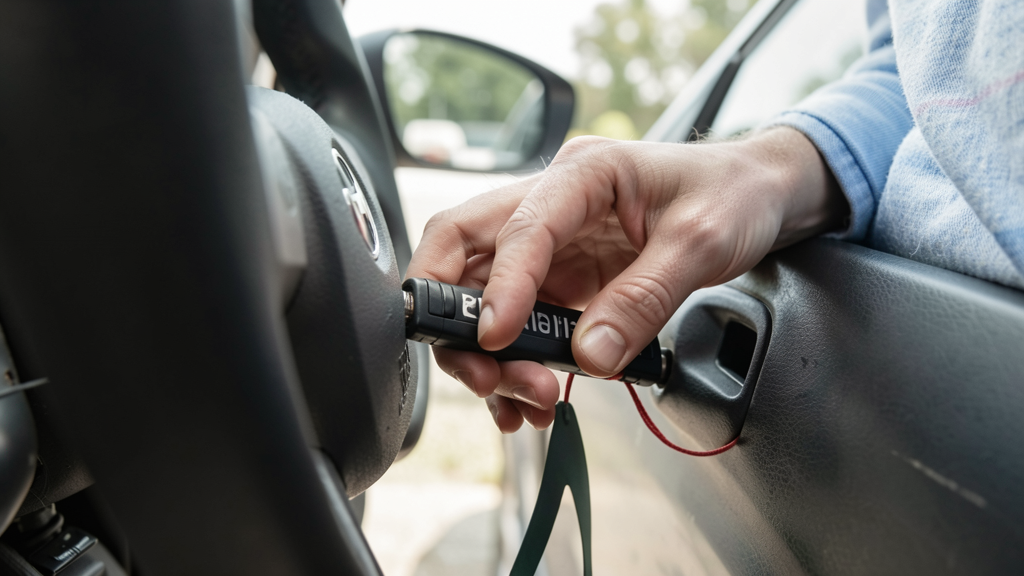
While physically invisible, these changes leave a digital footprint. Modern ECUs use a checksum system to verify data integrity. When a dealer technician plugs in during a diagnostic session, their equipment can often detect if the software version number matches the official release for that Vehicle Identification Number (VIN). If the checksum fails or the software ID is flagged as "unknown" or "aftermarket," the warranty claim for the drivetrain is typically denied immediately. The logic is sound: if the vehicle owner has altered the parameters governing the electric motor's torque output or the battery's discharge rate, the manufacturer cannot be held responsible if the motor overheats or a cell degrades prematurely. This is not an OTA issue; it is a tampering issue.
Myth: Dealers Use Updates to Generate Denial Data
A pervasive conspiracy theory suggests that manufacturers use mandatory OTA updates to scan vehicles for "abuse" or to plant time bombs that trigger failures just outside the warranty period. This ignores the technical reality of how modern vehicle architectures function. The primary goal of OTA capability in 2026 is cost reduction for the manufacturer.
Recalling a physical vehicle to a dealership for a software flash costs the manufacturer hundreds of dollars per unit in labor and logistics. Fixing that same bug remotely costs pennies in data bandwidth. Ford and Tesla have publicly documented billions of dollars in savings by utilizing OTA updates for recall campaigns rather than physical service appointments. It is counterintuitive for a brand to risk a class-action lawsuit or reputational damage by embedding malicious code in updates meant to improve reliability.
Furthermore, the data collected during an update is generally limited to the success rate of the installation and the current state of the vehicle's modules. While telemetry data is sent back to the cloud for analysis, using that data to fabricate a reason to deny warranty coverage would be a violation of consumer trust and, likely, the law. The system is designed to protect the asset's longevity, not sabotage it.
The Security Verification Layer and Liability
Safety-critical systems are increasingly isolated from the infotainment systems that users interact with daily. This segregation is vital. A hacker exploiting a vulnerability in the web browser of the infotainment system should theoretically be unable to access the steering or brakes. However, as vehicles become more integrated, the lines blur.
If a user attempts to "jailbreak" their vehicle to enable features that were disabled—such as hardware heated seats that the owner refuses to pay a subscription for—they often have to bypass the vehicle's security gateway. This process frequently involves disabling cryptographic signatures that verify the authenticity of software running on the car. Once this security layer is compromised, the integrity of the entire vehicle is in question.
In scenarios involving biometric entry systems, the vehicle relies on encrypted handshakes between the key fob or smartphone and the car's controller. If an unauthorized software flash alters the controller area network (CAN) bus protocols, these security features may fail. A manufacturer is well within their rights to deny a warranty claim on a stolen vehicle or a failed security module if the owner has modified the software stack responsible for authentication.
Performance Packages vs. Aftermarket Tuning
A confusing middle ground exists in the form of manufacturer-sold performance upgrades delivered via OTA. Some automakers, particularly in the high-performance EV sector, sell "Acceleration Boosts" or "Range Extensions" as digital purchases. Customers worry that buying these officially sanctioned changes might alter the powertrain in a way that excludes it from coverage.
This is rarely the case. When a manufacturer sells a software upgrade, they update the warranty documentation to reflect the new state of the vehicle. These packages are engineered with the same safety margins as the base software. The thermal management system, the suspension dampers, and the cooling capacity are all validated to handle the increased load. Conversely, a third-party tune that squeezes 10% more power out of an electric motor often ignores the thermal limits of the inverter, pushing the hardware beyond its design envelope. The difference is engineering validation versus hopeful extrapolation.
Myth: Once Updated, You Cannot Revert to a "Safer" Version
Drivers often believe that a "new" update is inherently riskier than the "stable" version the car shipped with. They fear being trapped on a buggy version of the software. While manufacturers generally do not allow users to downgrade firmware arbitrarily due to security concerns—old versions often have known exploits that are patched in newer ones—the fear of a mandatory, irreversible downgrade in quality is overstated.
Leveraging technologies similar to V2X (Vehicle-to-Everything) communication, vehicles can report issues back to the cloud in near real-time. If a specific software build causes a widespread issue, such as a phantom braking event or a connectivity failure, manufacturers can roll back the update or suspend the deployment remotely. The "safer" version is defined by the current validated build, not the age of the code. Sticking to an old version often leaves the vehicle vulnerable to security holes that have since been patched, creating a different kind of risk.
Liability in the Age of Automation
As we inch closer to Level 3 autonomy, the software version becomes a matter of legal liability, not just warranty coverage. If a vehicle equipped with a Level 3 autonomous system is involved in a collision while the automated driving system is engaged, investigators will immediately pull the ECU logs to determine the software version. If the car is running outdated firmware or unauthorized software, the liability could shift entirely from the manufacturer to the owner.
This extends to safety systems like Night Vision and automatic emergency braking. These systems rely on precise calibration of cameras and radar sensors. OTA updates often refine these algorithms to better detect pedestrians or animals in low-light conditions. Refusing these updates does not "preserve" the vehicle's original safety state; it leaves it equipped with obsolete detection logic that may fail in scenarios the newer software handles correctly.
The Verdict: Embrace the Update, Avoid the Hack
The line between a valid powertrain warranty and a voided contract is drawn at the source code. If the software comes from the OEM, whether delivered over the air by a technician at a dealership, it preserves the warranty. If the software comes from a third-party vendor promising results the manufacturer didn't intend, the warranty is null and void the moment the checksum fails.
Owners should treat OTA updates with the same acceptance as oil changes or tire rotations. They are essential maintenance tasks designed to keep the vehicle safe, efficient, and compliant. The paranoia surrounding updates is a vestige of a time when cars were purely mechanical. In 2026, keeping the software current is the single most effective way to ensure the powertrain—and the warranty covering it—remains healthy for the long haul.
Sources
To dig deeper and verify the data, see:
Read next
The Liability Handover: How Level 3 Autonomous Systems Shift Legal Responsibility
Understanding the precise legal and technical transition where liability shifts from the human driver to the manufacturer in Level 3 autonomous systems.
Can Biometric Entry Systems Replace Physical Keys?
A technical breakdown of fingerprint and facial recognition reliability against the escalating security vulnerabilities of keyless entry systems.