
Can Biometric Entry Systems Replace Physical Keys?
A technical breakdown of fingerprint and facial recognition reliability against the escalating security vulnerabilities of keyless entry systems.

The disappearance of the physical metal key from the automotive landscape has been gradual but relentless. What began with remote fobs evolved into smartphone-digital keys via NFC and ultra-wideband (UWB), and now stands on the precipice of full biological integration. As manufacturers push for a completely keyless future, the central debate shifts from convenience to critical security architecture. The question is not merely if we can remove the key, but if the biometric alternatives—fingerprint scanners and facial recognition cameras—are robust enough to secure a vehicle worth tens of thousands of dollars.
The Failure of Relay Attacks vs. Biological Authentication
The primary driver for abandoning traditional Passive Keyless Entry (PKE) systems is their inherent vulnerability to relay attacks. In this scenario, criminals amplify the signal between a key fob inside a home and a vehicle on the driveway, effectively tricking the car into believing the key is present. The UK’s Metropolitan Police reported that relay attacks accounted for nearly 60% of vehicle thefts in metropolitan areas as recently as 2023, forcing manufacturers to adopt motion-sensor inertial fobs that sleep when stationary. While UWB technology has mitigated this by measuring precise distance, many fleets still rely on older encryption standards.
Biometric entry proposes a solution to this by requiring the "something you are" factor rather than "something you have." A thief cannot relay a fingerprint or a face from a distance. However, this security advantage relies heavily on the implementation of liveness detection. High-end systems, such as the integrations found in the 2026 Hyundai Santa Fe and Genesis GV90, utilize capacitive fingerprint sensors that detect the electrical properties of skin, thwarting simple silicone replicas.
Environmental Limitations of Fingerprint Scanners
Despite the security benefits, fingerprint sensors in automotive contexts face distinct reliability hurdles that smartphone manufacturers do not encounter to the same degree. A phone is typically used in a controlled environment, whereas a vehicle door handle is exposed to extreme weather, UV degradation, and physical abrasion.
Capacitive sensors, which rely on electrical charge, can fail to read prints when the user’s fingers are wet, sweaty, or covered in gloves. While ultrasonic sensors—used in high-tier consumer electronics—can penetrate some layers of moisture, they struggle with heavy rain or freezing conditions that obscure the ridge detail required for authentication. According to the Society of Automotive Engineers (SAE) standards for biometric reliability published in late 2024, automotive-grade fingerprint scanners must maintain a False Rejection Rate (FRR) of less than 1% in temperatures ranging from -40°C to 85°C. In practice, independent testing by consumer advocacy groups in early 2026 showed that many integrated handle sensors saw their FRR spike to nearly 15% during winter conditions in northern climates.
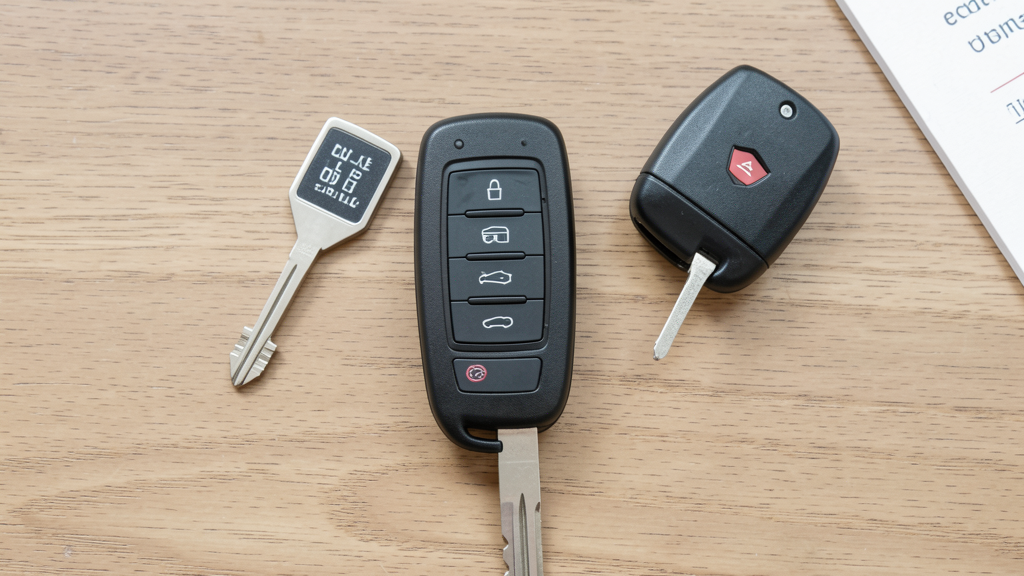
This reliability gap forces manufacturers to maintain redundant authentication methods. If a fingerprint sensor fails due to ice or debris, the system must revert to a digital key on a smartphone or a backup PIN code. If the backup is too easily accessible, it negates the security of the biometric; if it is too complex, it defeats the purpose of seamless entry. This friction creates a significant barrier to total physical key removal.
Facial Recognition: The Challenge of Exterior Liveness
Facial recognition offers a hands-free alternative that appeals to the luxury segment, but its implementation divides into two distinct categories: interior driver monitoring and exterior access. While interior cameras—used for Night Vision vs. High-Beam Assist: Which System Saves More Lives? systems—operate in a controlled lighting environment, exterior cameras face the chaos of the real world.
The difficulty lies in liveness verification outside the cabin. An exterior camera must distinguish between a living human face and a high-resolution photograph or a mask. In 2025, several security firms demonstrated that 2D infrared mapping systems could be bypassed using depth maps generated from social media photos. To counter this, newer systems employ ToF (Time of Flight) cameras or structured light projection to create a 3D map of the face.
The 2026 BYD Yangwang U8 employs an external facial recognition terminal that utilizes dual-frequency infrared and visible light analysis. While effective, the placement of these cameras creates a new attack vector. Unlike a fingerprint sensor tucked inside a handle, a camera lens is exposed to the elements. Mud, snow, or even a deliberate sticker placed over the lens can render the vehicle inaccessible. Furthermore, the processing power required for real-time 3D facial mapping consumes significant energy, posing a drain on the 12-volt auxiliary battery if the car sits for extended periods.
Data Privacy and the Regulatory Landscape
Beyond hardware reliability, the adoption of biometrics introduces a layer of data privacy complexity that physical keys never possessed. A lost key fob is a physical security risk; a compromised biometric database is an identity crisis. Under regulations like the GDPR in Europe and the CCPA in California, biometric data is classified as sensitive information requiring explicit consent and secure storage.
Manufacturers must decide where to process this data. Local processing on the vehicle's ECU (Electronic Control Unit) is generally considered safer than cloud transmission, as it eliminates the risk of interception during transfer. However, local storage creates complications if the vehicle is sold or scrapped. Manufacturers are required to provide a "digital right to be forgotten," ensuring that the previous owner's fingerprints or facial data are completely purged from the system.
There is also the question of law enforcement access. Unlike a physical key which cannot be duplicated remotely, a biometric system could theoretically be updated via Over-The-Air (OTA) patches. This raises concerns regarding backdoor access, though manufacturers insist that biometric templates are stored as irreversible mathematical hashes rather than actual images. The debate over Myth vs. Reality: Will OTA Updates Void Your Powertrain Warranty? highlights the consumer skepticism surrounding remote software control, which extends naturally to remote biometric access management.
The Redundancy Requirement
The consensus among automotive safety engineers in 2026 is that biometrics cannot yet serve as a standalone solution. The mechanical backup key—a feature that has persisted even in the era of keyless go—remains a regulatory requirement in many jurisdictions. A vehicle that relies solely on electronics risks stranding occupants if the main battery depletes or if a central module fails.
The industry is moving toward a Multi-Factor Authentication (MFA) model for vehicles. In this scenario, entry might require a fingerprint combined with the presence of a verified smartphone (UWB), adding a layer of "something you have" to "something you are." This approach significantly raises the difficulty for thieves, as they would need to bypass both the biological check and the digital proximity check simultaneously.
The Verdict: Evolution, Not Replacement
Biometric entry systems will not completely replace physical keys in the immediate future, nor should they. The technology serves as a sophisticated enhancement to digital key systems rather than a total replacement for mechanical redundancy. While the security benefits regarding relay attacks are substantial, the environmental fragility of sensors and the severe consequences of a dead battery necessitate a fallback mechanism.
The transition to biometrics represents a shift in liability and trust. Moving the security burden from a piece of metal to a biological identifier requires the driver to trust the manufacturer's cybersecurity protocols implicitly. As we explore How Level 3 Autonomous Systems Differentiate Liability from Level 2, the automotive world is learning that software-defined features carry complex legal and safety implications. For now, the smartest systems utilize biometrics as a primary convenience layer, backed by mechanical failsafes that ensure a dead sensor never results in a permanently locked car.
Sources
To dig deeper and verify the data, see:
Read next
The Liability Handover: How Level 3 Autonomous Systems Shift Legal Responsibility
Understanding the precise legal and technical transition where liability shifts from the human driver to the manufacturer in Level 3 autonomous systems.

Myth vs. Reality: Will OTA Updates Void Your Powertrain Warranty?
Manufacturer-sent software patches are legally treated as maintenance repairs, whereas unauthorized ECU flashes remain the fastest way to void your drivetrain coverage.