
Myth vs. Reality: Do 'Sport' Exhausts Actually Improve Performance?
Investigating whether expensive aftermarket exhaust systems deliver legitimate horsepower gains or merely an increase in cabin volume.


The automotive aftermarket has long peddled a seductive equation: louder equals faster. Walk through the pits of any track day in 2026, and the cacophony of resonating exhaust notes suggests that removing the muffler is the first step toward a podium finish. Manufacturers of "sport" exhaust systems often advertise claims of significant horsepower increases, but the correlation between the noise heard at idle and the power produced at redline is frequently misunderstood. The reality of exhaust flow dynamics involves a complex trade-off between scavenging efficiency, backpressure, and noise suppression that a simple pipe swap rarely solves for every RPM range.
Separating the marketing hype from engineering truth requires looking at the data rather than listening to the sound. While a free-flowing exhaust can unlock potential, the majority of bolt-on cat-back systems sold for naturally aspirated street cars prioritize acoustic theater over measurable velocity gains. Understanding why requires a look at the physics of gas flow and the limitations of the modern engine control unit.
The False God of Zero Backpressure
A pervasive myth suggests that eliminating all backpressure is the ultimate goal for an exhaust system. The logic follows that if the engine doesn't have to push against resistance to expel exhaust gases, it will generate more power. This simplistic view ignores the concept of exhaust scavenging and exhaust gas velocity. In a naturally aspirated engine, the exhaust pulses travel in waves. A properly designed exhaust uses the negative pressure wave of one pulse to help pull the next pulse out of the cylinder.
Achieving this requires maintaining a specific gas velocity, which in turn necessitates a certain amount of restriction. If the piping diameter is increased too drastically to minimize backpressure, the exhaust gas velocity drops significantly, especially at lower RPMs. This slow-moving gas loses its scavenging effect, meaning the engine must spend energy pushing stagnant gas out of the cylinder. The result is often a measurable loss of torque in the low-to-mid range, precisely where street driving occurs. Manufacturers spend millions designing OEM manifolds that balance flow versus velocity; replacing them with oversized straight pipes often disrupts this delicate equilibrium.
Why Louder Rarely Means Faster
For the average consumer, the primary metric of a new exhaust system is the change in decibels, yet this is frequently the least correlated variable with performance gains. Mufflers and resonators function to tune the sound and manage flow, but a straight pipe is merely a hole, not an engineered flow solution. Many aftermarket "sport" mufflers reduce restriction simply by removing sound-deadening materials like fiberglass packing or perforated tubes, resulting in a louder drone without significantly altering the flow path.
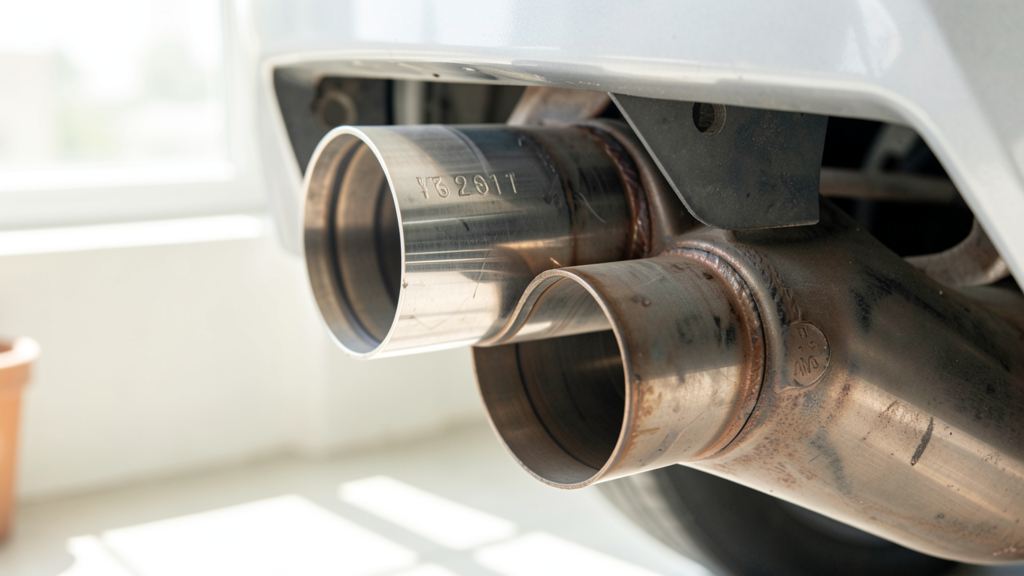
When independent dyno tests are conducted on popular 2024-2026 model year sports sedans, the discrepancy becomes clear. A system that adds 5 decibels of noise might only add 3 to 5 horsepower at the wheels—often within the margin of error of the dyno itself. The user pays a premium for the auditory experience while receiving negligible kinetic returns. In extreme cases, removing the factory catalytic converters—often done to maximize flow—can trigger check engine lights and cause the engine management system to retard timing to protect components, actually reducing net power output.
The Turbocharger Disparity
The narrative shifts entirely when discussing forced induction. Turbocharged engines operate under a different set of physical laws where backpressure before the turbine (exhaust manifold pressure) relative to pressure after the turbine is critical. High backpressure on the outlet side of the turbocharger creates a pressure ratio that forces the turbine to work harder to spool, increasing lag and reducing efficiency.
In this context, a "sport" exhaust can provide legitimate, tangible gains. By increasing the pipe diameter from the factory 2.25 inches to 3 inches post-turbo, the pressure drop across the turbine housing increases, allowing the turbocharger to spool faster and maintain boost pressure more efficiently. This is why modern performance platforms are pivoting toward complex induction setups. As noted in our analysis of why hypercars are switching to turbocharged inline-4s, managing exhaust flow is paramount to extracting high specific output from smaller displacement engines. For a turbo owner, the exhaust is not just a sound mod; it is a fundamental efficiency upgrade that can unlock double-digit power gains when paired with an appropriate ECU tune.
Misattributed Gains: The Hidden Tune
A common source of confusion for enthusiasts involves the installation sequence of modifications. A buyer installs a full exhaust system, uploads a new "Stage 2" engine map provided by the tuner, and logs a 30-horsepower gain on the dyno. The temptation is to credit the stainless steel piping for the massive leap in performance. However, the reality is that the exhaust likely contributed a fraction of that total, while the aggressive ECU calibration—advancing timing, increasing boost, and enriching the fuel mixture—did the heavy lifting.
Without the tune, many modern engines will not see significant gains from an exhaust swap alone because the factory ECU operates in closed-loop mode, targeting specific lambda values that limit power output. The exhaust modification is often a prerequisite for the tune, particularly in terms of managing egt (exhaust gas temperature), but it is rarely the sole source of the power jump. Verifying these gains requires precise data logging. Enthusiasts looking to validate their investment should utilize telemetry data to lower their lap times rather than relying on seat-of-the-pants dyno feels, which are notoriously unreliable.
The Decibel Tax at the Track
Beyond the street legality, there is a practical cost to chasing sound over performance: track day noise limits. Circuits worldwide have become increasingly strict with decibel meters situated at trackside. A system that adds 10dB might feel thrilling on a canyon run, but it can result in a black flag at a venue like Laguna Seca or Circuit de Barcelona-Catalunya, where static limits often sit around 90dB to 95dB.
The irony is that many of these loud systems do not help the car go faster; they merely limit where the car is allowed to drive. Even high-level machinery like the Porsche 911 GT3 RS struggles with this dichotomy, delivering immense performance that is sometimes curtailed by exhaust noise regulations at popular track venues. Investing in an exhaust system solely for the auditory experience without considering the functional utility—such as valves that allow quiet modes for noise compliance—is an exercise in diminishing returns.
Verdict
The automotive market is saturated with exhaust systems that promise a transformation in vehicle dynamics but deliver primarily a transformation in cabin volume. For the majority of naturally aspirated vehicles, the investment in a bolt-on exhaust yields poor returns on a dollar-per-horsepower basis. The resources allocated toward a shiny cat-back system would often be better spent on tires, suspension components, or brake upgrades—modifications that provide a tangible, repeatable improvement in lap times and driver confidence.
The performance argument for exhausts remains strong, but strictly within specific contexts: turbocharged applications where flow restriction is a genuine bottleneck, or highly modified naturally aspirated builds where the engine head and camshafts have been changed to require higher flow rates. For the rest of the grid, the "sport" exhaust is an aesthetic choice. It should be purchased because the owner enjoys the sound, not because they expect the car to accelerate significantly faster. Honest modification requires admitting when a part is for the driver's ears rather than the car's engine.
Sources
To dig deeper and verify the data, see:
Read next

Decoding the Graph: A Step-by-Step Guide to Using Telemetry Data to Lower Your Lap Times
Amateur track drivers can break through performance plateaus by learning to read throttle, brake, and steering traces to isolate and correct specific driving errors.

The Porsche 911 GT3 RS: A Track Weapon or a Noise Complaint?
Dissecting the Porsche 911 GT3 RS to see if its staggering aerodynamic downforce justifies the noise pollution fines and suspension harshness on public roads.