
Manual vs. Automatic: Which Transmission Is Faster on the Nürburgring?
Analyzing shift times and sector performance to determine if the driving engagement of a manual gearbox justifies the lap time deficit on the Nürburgring Nordschleife.

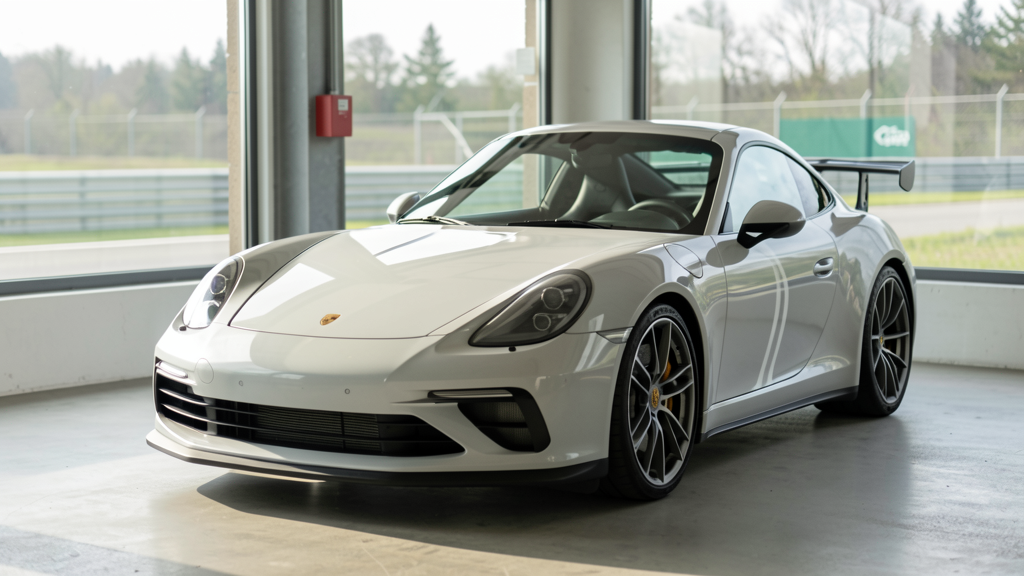
The Nürburgring Nordschleife does not negotiate. With over 20 kilometers of asphalt, 73 corners, and elevation changes that expose every mechanical weakness, this track serves as the ultimate filter for automotive performance. In the pursuit of the perfect lap, the transmission has become the central battleground. The debate is no longer just about synchromesh versus planetary gears; it is about the quantifiable gap between a dual-clutch transmission (DCT) and a traditional manual gearbox in a setting where seconds are divided into tenths and hundredths.
Modern supercars have largely abandoned the third pedal, yet a passionate segment of the market still clamors for manual transmissions in track-focused vehicles. The question for 2026 is not which transmission is more engaging—subjective preference is rarely a good metric for engineering decisions—but which is objectively faster. By examining shift times, longitudinal g-forces, and sector data, we can map out exactly where the manual transmission loses time and whether that loss matters for anyone chasing a lap record.
The Physics of the Gear Change
The fundamental advantage of a dual-clutch transmission lies in its ability to pre-select the next gear. While one clutch manages the torque delivery to the driving wheels, the second clutch prepares the subsequent ratio. This architecture allows for a power shift, where the transmission swaps cogs in milliseconds without severing the connection between the engine and the wheels.
In contrast, a manual transmission requires a sequence of events that takes significantly longer and interrupts power flow. The driver must lift off the throttle, disengage the clutch via the pedal, move the shifter through the gate, engage the clutch, and reapply throttle. Even with a professional driver performing a perfectly matched rev downshift, the sequence is bound by human reaction speed and mechanical movement.
Industry data regarding shift times paints a stark picture. High-end DCTs, such as the PDK found in Porsche 911 GT3 models, can execute upshifts in under 50 milliseconds. Downshifts, including rev-matching, occur just as quickly. A highly skilled human operating a manual gearbox typically requires between 400 and 600 milliseconds to complete a shift. This discrepancy means that for every gear change, the manual car is coasting or decelerating for roughly half a second longer than its automatic counterpart.

Acceleration and Distance Metrics
To understand the impact of those milliseconds, one must convert time into distance. At the average speeds seen on the Nordschleife, a car is travelling at approximately 160 km/h (100 mph). At this velocity, a vehicle covers roughly 44 meters every second. If a manual transmission requires an extra 0.4 seconds to complete a shift compared to a DCT, the car effectively loses propulsion for nearly 18 meters per gear change.
During a full lap of the Nordschleife, a driver will typically shift gears between 30 and 40 times depending on the final drive ratio and the specific car's power band. Aggregating the lost propulsion time reveals a significant deficit. If we conservatively estimate a 0.3-second delay per shift over 30 shifts, the manual transmission loses roughly 9 seconds of pure acceleration potential relative to the DCT over the course of a single lap. While this is a theoretical maximum that assumes perfect execution by the DCT and simultaneous shifting by both cars, it illustrates the scale of the penalty.
Longitudinal acceleration data from telemetry tests supports this. A DCT maintains a positive G-force vector during the upshift, keeping the car pinned forward. A manual car sees a sharp drop in G-force to zero or negative values during the shift interval. Recovering that momentum requires re-accelerating the mass of the car, consuming additional time and fuel. Learning to interpret these telemetry traces is essential for understanding exactly where a lap time is gained or lost.
Sector Analysis and Corner Exit Speeds
The penalty is not evenly distributed across the track. The greatest impact occurs on corner exits, specifically in sections like Dottinger Hohe or the long run up to Schwedenkreuz. Here, the ability to put power down immediately while the steering angle is straightening is critical. A DCT allows the driver to focus entirely on steering inputs and throttle modulation, knowing the gear change will be instantaneous and without shock to the driven wheels.
With a manual, the physical act of shifting distracts from the steering and weight transfer. Furthermore, the risk of over-revving or missing a gear introduces a potential variance that simply does not exist with an automatic. On a track as unforgiving as the Nürburgring, a missed shift at Flugplatz or Adenauer Forst can lead to a catastrophic off-track excursion.
However, there are specific sections where the manual's deficit is minimized. In the tight, technical sections like the Hohe Acht or the stadium section, speeds are lower, and the difference in distance covered during a shift is reduced. In these zones, the manual transmission's direct mechanical connection can offer superior feel for the rear axle grip, allowing some drivers to modulate the throttle with more precision. Unfortunately, the stopwatch rarely rewards "feel" over speed. The cumulative time lost on the fast straights and medium-speed corners invariably outweighs any confidence gained in the slow hairpins.
The Driver as the Limiting Factor
An often overlooked variable in this equation is the consistency of the human element. A dual-clutch transmission produces the exact same shift time every time, lap after lap, until the transmission fluid overheats. It does not get fatigued, it does not get distracted, and it never misses a gate.
A human driver, even a professional, suffers from degradation in performance. As physical fatigue sets in during a long session, shift quality degrades. Clutch engagement points become less precise, and rev-matching becomes sloppy. This inconsistency makes it difficult to extract a repeatable perfect lap from a manual transmission. For manufacturers setting production car records—which is the primary marketing metric for supercars in 2026—the automatic transmission is the only logical choice. It guarantees that the vehicle performs at the peak of its mechanical capability regardless of minor variances in driver input.
Verdict: When Emotion Yields to Physics
The data establishes a clear hierarchy. In the context of the Nürburgring and the pursuit of minimum lap times, the dual-clutch transmission is objectively superior. The combined penalty of shift duration, acceleration loss, and physical fatigue creates a gap that a manual gearbox cannot bridge. The performance difference is not trivial; it is the difference between a podium finish and the back of the pack in a time attack scenario.
For the buyer deciding between a manual and an automatic in 2026, the decision comes down to the primary use case. If the vehicle is intended for track days, sector battles, or setting personal bests, the automatic is the only rational choice. The technology provides a tangible advantage that no amount of driver skill can fully compensate for. The manual gearbox, while offering a tactile connection that many enthusiasts find irreplaceable, operates at a distinct disadvantage. It turns the act of driving into a complex physical task, whereas the automatic frees the driver to focus entirely on trajectory. At the limit, focus translates to speed, and speed is the only metric that matters on the Nordschleife.
Sources
To dig deeper and verify the data, see:
Read next

The Porsche 911 GT3 RS: A Track Weapon or a Noise Complaint?
Dissecting the Porsche 911 GT3 RS to see if its staggering aerodynamic downforce justifies the noise pollution fines and suspension harshness on public roads.

Decoding the Graph: A Step-by-Step Guide to Using Telemetry Data to Lower Your Lap Times
Amateur track drivers can break through performance plateaus by learning to read throttle, brake, and steering traces to isolate and correct specific driving errors.